Heat Stress: A Preventable Hazard That No Facility Can Afford to Ignore
By Mark A. Kohout, Midwest Regional Manager – Regulatory Specialist Vanguard Environmental, Inc. (Rolling Meadows, IL)
Mark A. Kohout is the Midwest Regional Manager – Regulatory Affairs and Senior Regulatory Specialist for Vanguard Environmental, Inc. Based in Rolling Meadows, Illinois, he partners with industrial facilities throughout the Midwest to help organizations achieve and maintain environmental and safety compliance. Working alongside Vanguard's engineering and regulatory specialists, Mark assists clients with developing practical, site-specific compliance programs that reduce regulatory risk, improve workplace safety, and provide defensible documentation during regulatory inspections.
Every summer, employers prepare for increased production demands, employee vacations, and changing weather conditions. Unfortunately, many facilities overlook one of the most significant seasonal hazards facing their workforce—heat stress. Whether employees work outdoors, inside manufacturing plants, foundries, warehouses, or facilities with limited ventilation, excessive heat can quickly become a life-threatening condition if proper precautions are not taken. A well-developed Heat Stress Prevention Program is no longer simply considered the best practice; it is an essential component of protecting employees and reducing organizational risk.

Heat stress occurs when the body's natural cooling system can no longer maintain a safe internal temperature. As body temperatures continue to rise, workers become increasingly susceptible to heat cramps, heat exhaustion, heat syncope, heat rash, and ultimately heat stroke—the most severe heat-related illness. Heat stroke is a medical emergency that can cause permanent organ damage or death if immediate action is not taken. Employees may experience dizziness, confusion, heavy sweating followed by dry skin, rapid pulse, loss of coordination, or unconsciousness. Every supervisor should be trained to recognize these warning signs before a medical emergency develops.
The consequences of failing to implement proper heat stress controls have been significant across numerous industries. In 2022, a 66-year-old United States Postal Service employee in Texas collapsed while delivering mail during extreme summer temperatures and later died from heat-related injuries. The incident generated national attention and intensified scrutiny regarding employer responsibilities to protect workers from excessive heat exposure. Following investigations, federal regulators cited deficiencies in workplace heat protection practices and emphasized the need for comprehensive prevention programs.
Construction, agriculture, manufacturing, transportation, and warehousing have also experienced numerous preventable fatalities associated with excessive heat exposure. OSHA investigations have repeatedly found situations where employees were required to perform physically demanding work during periods of excessive heat without adequate water, scheduled recovery breaks, acclimatization procedures, or supervisor training. Many of these incidents involved new employees who had not yet adapted to working in hot environments or experienced workers who underestimated the dangers associated with prolonged heat exposure.

Industrial manufacturing facilities often present unique challenges. Employees working near furnaces, ovens, boilers, molten metals, steam systems, compressors, or other heat-generating equipment may experience temperatures substantially higher than outdoor conditions. Even facilities with air-conditioned offices may have production areas where temperatures exceed safe working limits. Without proper engineering controls, ventilation, hydration practices, and administrative controls, employees remain at elevated risk throughout the workday.
An effective Heat Stress Prevention Program begins with a formal hazard assessment. Employers should identify tasks involving elevated heat exposure, evaluate environmental conditions, determine which employees are most vulnerable, and establish procedures for monitoring changing weather conditions. Supervisors should understand when heat index values increase the likelihood of heat-related illness and when additional protective measures become necessary.
Hydration remains one of the simplest and most effective preventive measures. Employees should have unrestricted access to cool drinking water throughout their shifts and should be encouraged to drink water frequently rather than waiting until they become thirsty. Electrolyte replacement beverages may also be appropriate during extended periods of strenuous work. Employers should provide shaded or cooled recovery areas where employees can safely reduce their body temperature during scheduled rest periods.

Employee training is equally important. Workers should understand the symptoms of heat-related illnesses, know how to respond when a coworker begins exhibiting warning signs, and feel empowered to immediately report concerns without fear of disciplinary action. Supervisors should receive additional training regarding emergency response procedures, medical notification requirements, and when to immediately contact emergency medical services.
Documentation also plays a vital role in protecting an organization. A written Heat Stress Prevention Program demonstrates that management has identified workplace hazards, implemented preventive measures, trained employees, and established emergency response procedures. This documentation becomes especially valuable during OSHA inspections, internal audits, workers' compensation investigations, and incident reviews. A documented program not only protects employees but also provides evidence that the employer exercised due diligence in addressing recognized workplace hazards.

OSHA has significantly increased its focus on occupational heat exposure in recent years through enforcement initiatives, inspections, and regulatory development. Employers should recognize that heat-related hazards are evaluated under OSHA's General Duty Clause when recognized hazards are not adequately addressed. Organizations that proactively establish site-specific heat stress procedures place themselves in a much stronger position than those attempting to react after an employee has already become ill.
Ultimately, every heat-related illness that is prevented represents far more than regulatory compliance. It means an employee returns home safely to family and loved ones at the end of the day. A comprehensive Heat Stress Prevention Program demonstrates an organization's commitment to protecting its workforce while reducing operational disruptions, liability exposure, and regulatory risk. As temperatures continue to rise each summer, facilities that prepare before the heat arrives will always be better positioned than those forced to respond after tragedy.
Construction Worker Dies from Heat Illness (2024)

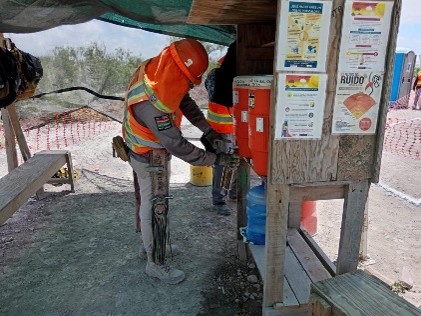

OSHA Headline: "US Department of Labor cites Alabama construction employer after heat illness claims life of 33-year-old worker at Huntsville job site." OSHA investigators found the worker showed obvious signs of heat illness, including stumbling, incoherent speech, vomiting, and collapse—while working in a heat index near 107°F. Investigators concluded the employer failed to implement adequate water, rest, shade, and heat illness prevention measures.