When Emergency Response Becomes a Hazard: Lessons from OSHA's Houston Chemical Spill Investigation
By Mairis Ramos, Director/OSHA Education/Environmental Manager (Tulsa)
Mairis Ramos hales from Venezuela as an Industrial Engineer with 10 years of experience in Safety, Environment and Occupational Health. Her ability to implement accident reduction programs is a testament to her commitment to excellence and innovation in the field of industrial engineering.
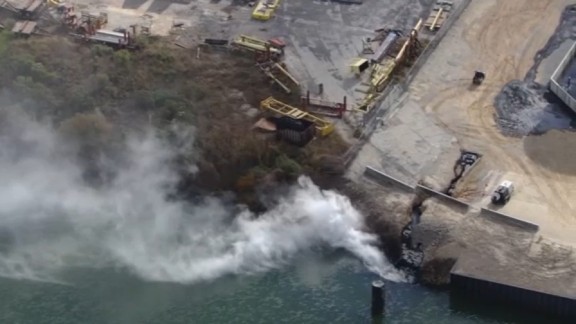
Industrial chemical emergencies demand rapid action, but speed without preparation can create a second emergency. OSHA's investigation into the December 2025 sulfuric acid release at a Houston-area terminal illustrates how emergency response activities can expose employees and responders to significant hazards when planning, hazard recognition, communication, and protective measures are inadequate. According to OSHA, approximately one million gallons of sulfuric acid were released following equipment failures, creating an incident that required a coordinated response involving multiple organizations. The investigation serves as a reminder that emergency response plans are only effective when they are practiced, supported by competent hazard assessments, and implemented under a strong incident command structure.
The Incident
The release occurred during transfer operations involving concentrated sulfuric acid. Once the release began, the priority shifted from normal operations to protecting workers, containing the spill, and minimizing environmental impacts. Responders faced a rapidly changing situation where atmospheric conditions, unknown exposure potential, and operational pressures complicated decision making. OSHA's subsequent investigation focused not only on the mechanical causes of the release but also on how workers were protected during the response and cleanup activities.
OSHA's Investigation
OSHA identified numerous deficiencies involving emergency preparedness, employee protection, and hazard control. The agency alleged failures related to emergency response planning, respiratory protection, hazard communication, employee training, and safe work practices. These findings reinforce that emergency response is not simply about reacting quickly; it requires systematic planning before an incident ever occurs. Hazard assessments must be updated continuously as conditions evolve, and responders must receive accurate information regarding the chemicals involved, potential reaction products, exposure routes, and required protective equipment.
Why Emergency Response Became the Hazard
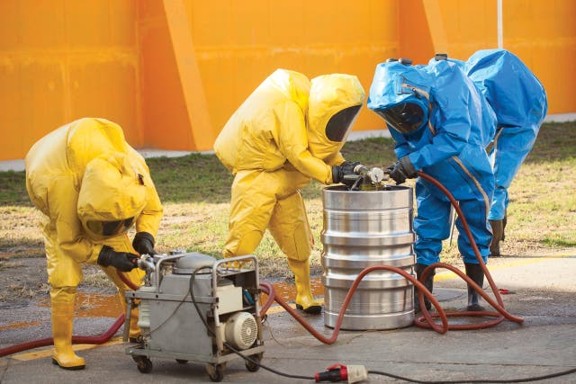
Many emergency incidents become more dangerous because responders enter environments with incomplete information. Selecting improper respiratory protection, delaying atmospheric monitoring, or assuming conditions remain stable can dramatically increase risk. Sulfuric acid releases may generate corrosive mists capable of causing severe respiratory injury. Without continuous monitoring and appropriate PPE, responders themselves can become casualties. Effective communication is equally important. Incident command personnel, contractors, supervisors, and emergency responders must share real-time information so that protective actions remain aligned with changing hazards. Regular drills and realistic exercises help organizations identify weaknesses before an actual emergency occurs.
Applicable OSHA Standards
Several OSHA standards directly support safe emergency response programs. 29 CFR 1910.120 (HAZWOPER) establishes requirements for emergency response to hazardous substance releases, including training, medical surveillance, incident command, and emergency planning. 29 CFR 1910.134 requires employers to establish an effective respiratory protection program whenever respirators are necessary. 29 CFR 1910.132 requires employers to assess workplace hazards and provide appropriate personal protective equipment (PPE), while 29 CFR 1910.1200 requires effective hazard communication and employee access to Safety Data Sheets. Together, these standards create the foundation for protecting workers before, during, and after a hazardous materials emergency.
Lessons for Industry
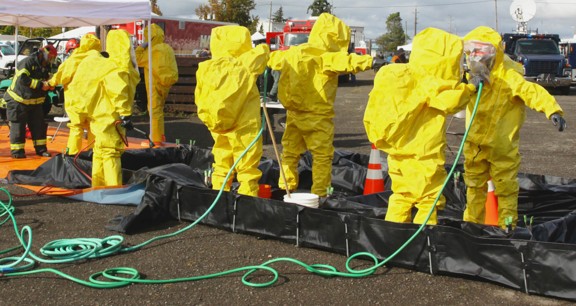
Every facility that stores or transfers hazardous chemicals should periodically evaluate whether its emergency response program reflects actual operating conditions. Emergency response plans should clearly define responsibilities, communication protocols, evacuation criteria, spill control strategies, and responder qualifications. Atmospheric monitoring equipment should be immediately available and personnel should understand both its capabilities and limitations. Facilities should also review contractor coordination procedures, conduct regular tabletop and field exercises, verify PPE selection using current hazard assessments, and evaluate employee competency rather than relying solely on classroom training. Lessons learned from investigations should be incorporated into continuous improvement efforts instead of being treated as isolated events.
The release of sulfuric acid in Houston demonstrates that successful emergency response depends on preparation long before an emergency occurs. OSHA's investigation highlights that deficiencies in planning, communication, training, and protective measures can transform responders into victims. Organizations that invest in robust emergency response programs, realistic exercises, effective hazard assessments, and continuous improvement are better positioned to protect employees, minimize operational disruption, and comply with OSHA requirements. The most valuable lesson is simple: emergency response should reduce risk, not create new hazards.
References:
- OSHA News Release (June 2026) regarding the Houston-area sulfuric acid spill investigation and proposed citations.
- OSHA 29 CFR 1910.120 (HAZWOPER).
- OSHA 29 CFR 1910.132 Personal Protective Equipment.
- OSHA 29 CFR 1910.134 Respiratory Protection.
- OSHA 29 CFR 1910.1200 Hazard Communication.